
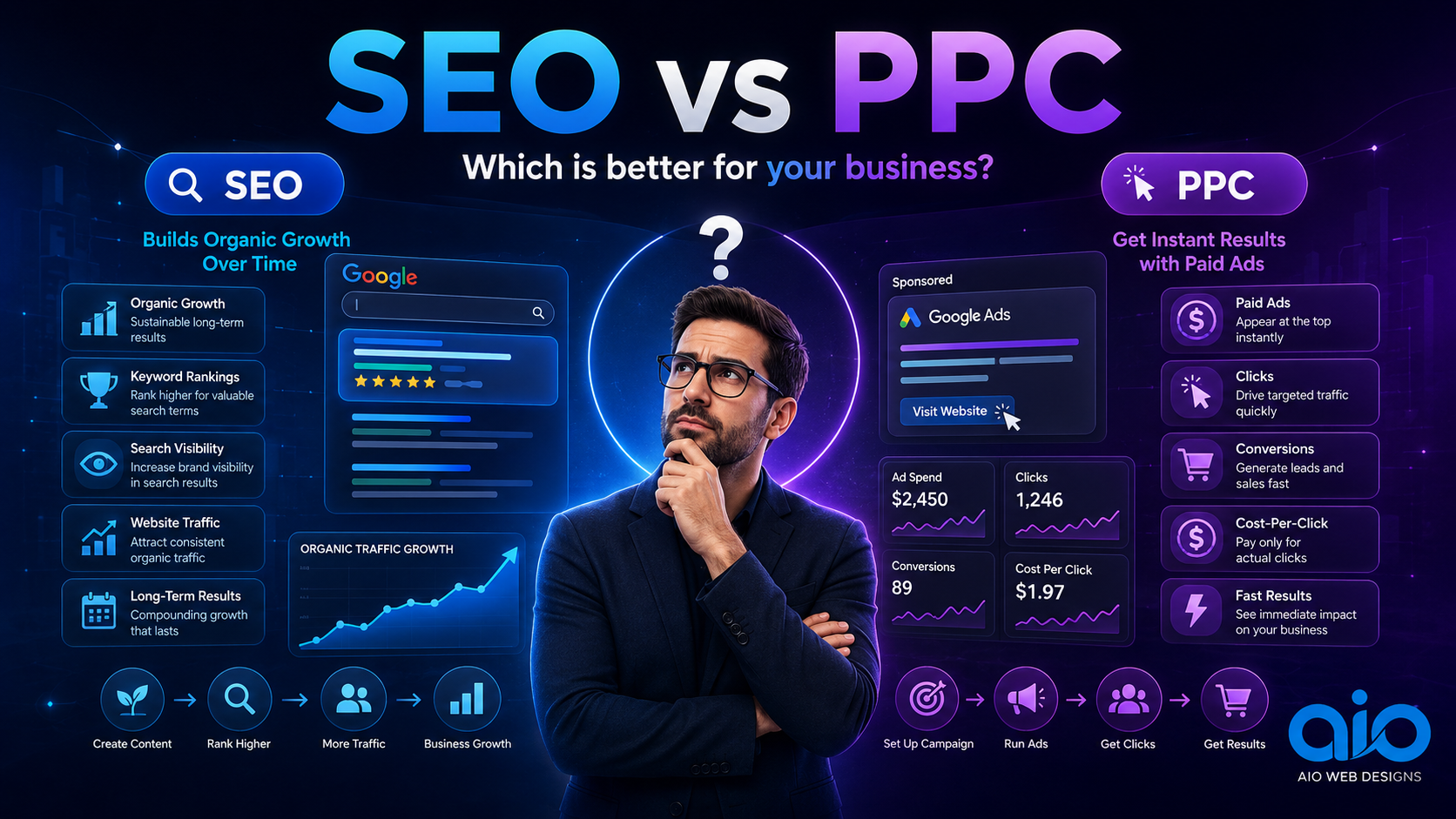
As a business owner in Denver, Colorado, you are constantly looking for ways to grow your online presence and attract more customers. In the vast world of digital marketing, two acronyms often dominate the conversation: SEO and PPC. The debate over SEO vs PPC is not about choosing one over the other in every scenario. It is about understanding their unique strengths and determining how they can support your business goals.
At AIO Web Designs, we frequently guide clients through this decision, helping them build digital marketing strategies that balance immediate visibility with sustainable growth. Search engine optimization and paid advertising can both place your business in front of people actively searching for your products or services, but they accomplish that goal in very different ways.
Many businesses, especially those just beginning their digital marketing journey, ask, “Should I invest in SEO or PPC?” It is an important question that deserves a thorough answer. Both search engine optimization and pay-per-click advertising can increase your visibility on search engines such as Google, but their costs, timelines, targeting options, and long-term benefits are different.
This guide explores the differences between SEO and PPC, the advantages and disadvantages of each strategy, and how Denver businesses can decide where to invest their marketing budget.
Understanding SEO: The Organic Growth Engine
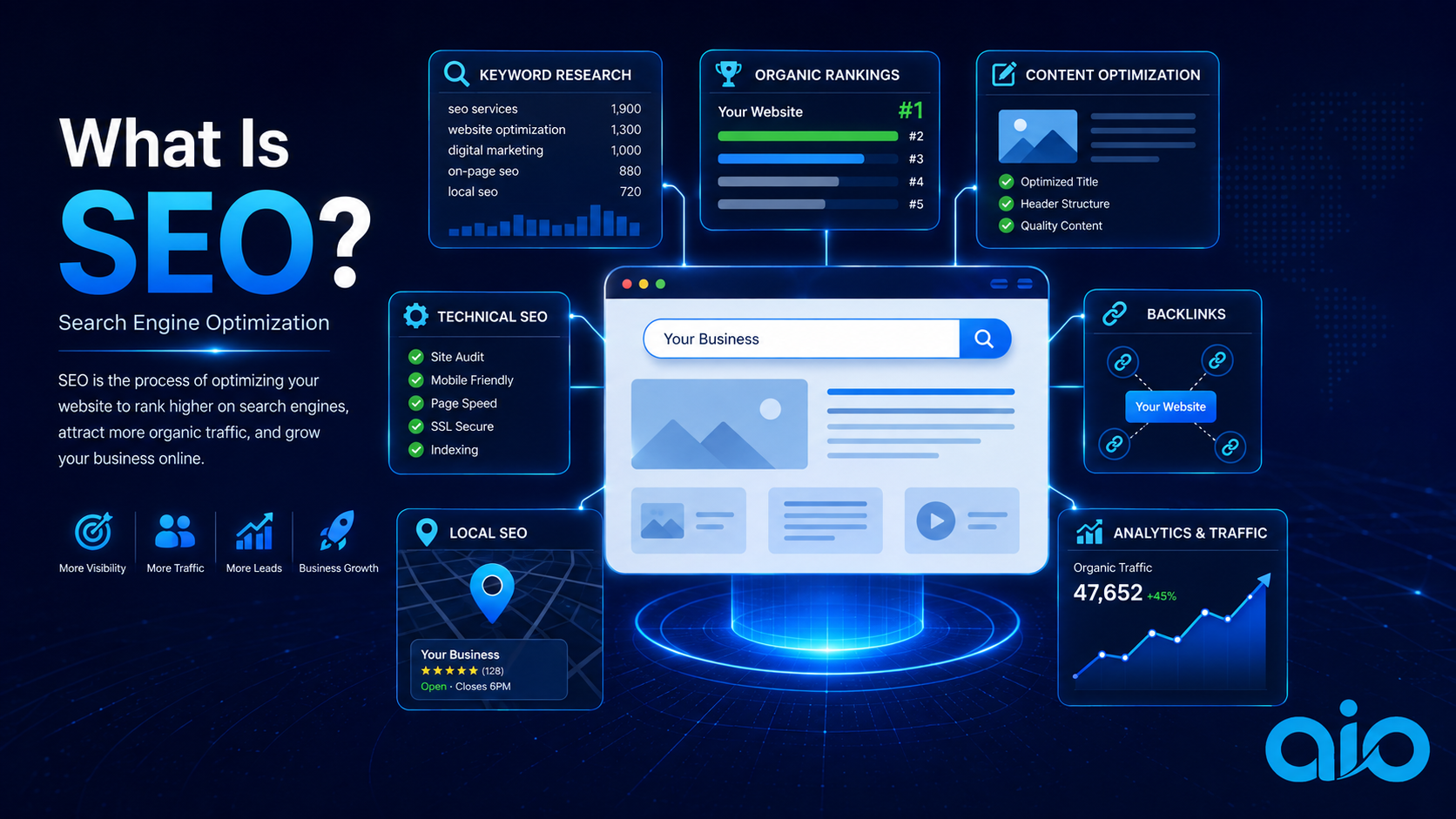
SEO, or search engine optimization, is the process of improving a website so it can become more visible within unpaid search engine results. When someone searches for a service or product your company offers, an effective SEO strategy helps Google understand why your website may be a relevant and trustworthy result.
Instead of paying for each visit, your business earns organic visibility by improving its website, content, authority, local presence, and overall user experience. This makes SEO especially valuable for companies that want to build a dependable source of website traffic over time.
How Does SEO Work?
SEO involves several connected areas of work. A complete strategy usually includes technical SEO, on-page optimization, content development, internal linking, authority building, local SEO, and performance tracking.
Common SEO activities include:
- Researching the keywords potential customers use
- Improving page titles, headings, content, and metadata
- Creating useful service pages and educational articles
- Fixing crawlability, indexing, redirect, and canonical issues
- Improving website speed and mobile usability
- Adding clear internal links between related pages
- Earning relevant backlinks from reputable websites
- Optimizing Google Business Profile information
- Building locally relevant content for Denver-area searches
- Tracking impressions, clicks, rankings, traffic, and conversions
SEO is not simply about adding keywords to a page. Search engines evaluate whether the page satisfies the searcher’s intent, provides useful information, functions properly, and comes from a credible source.
The Long-Term Benefits of SEO
One of the greatest advantages of SEO is its ability to generate ongoing value. Once a page begins ranking well for relevant searches, it can continue attracting visitors without requiring a payment every time someone clicks the result.
A successful SEO strategy can help a business:
- Increase organic website traffic
- Build brand recognition
- Establish industry authority
- Generate leads over an extended period
- Improve visibility for multiple related keywords
- Reduce dependence on paid advertising
- Strengthen local search visibility
Organic rankings can also create trust. Some searchers prefer unpaid results because they view them as recommendations earned through relevance and authority rather than purchased advertising placements.
The Challenges of SEO
The primary challenge with SEO is time. It is not an overnight solution. Search engines need time to crawl changes, evaluate pages, compare competing websites, and determine where each result should appear.
The timeline can vary based on:
- The age and history of the website
- The competitiveness of the target keywords
- The website’s existing authority
- The quality and depth of its content
- Technical problems affecting crawlability
- The strength of competing businesses
- The amount and consistency of SEO work completed
A Denver business targeting a highly competitive phrase may need several months of focused work before seeing meaningful improvements. Newer companies may need even longer to establish authority. SEO requires patience, consistency, and ongoing refinement.
Exploring PPC: The Immediate Visibility Driver
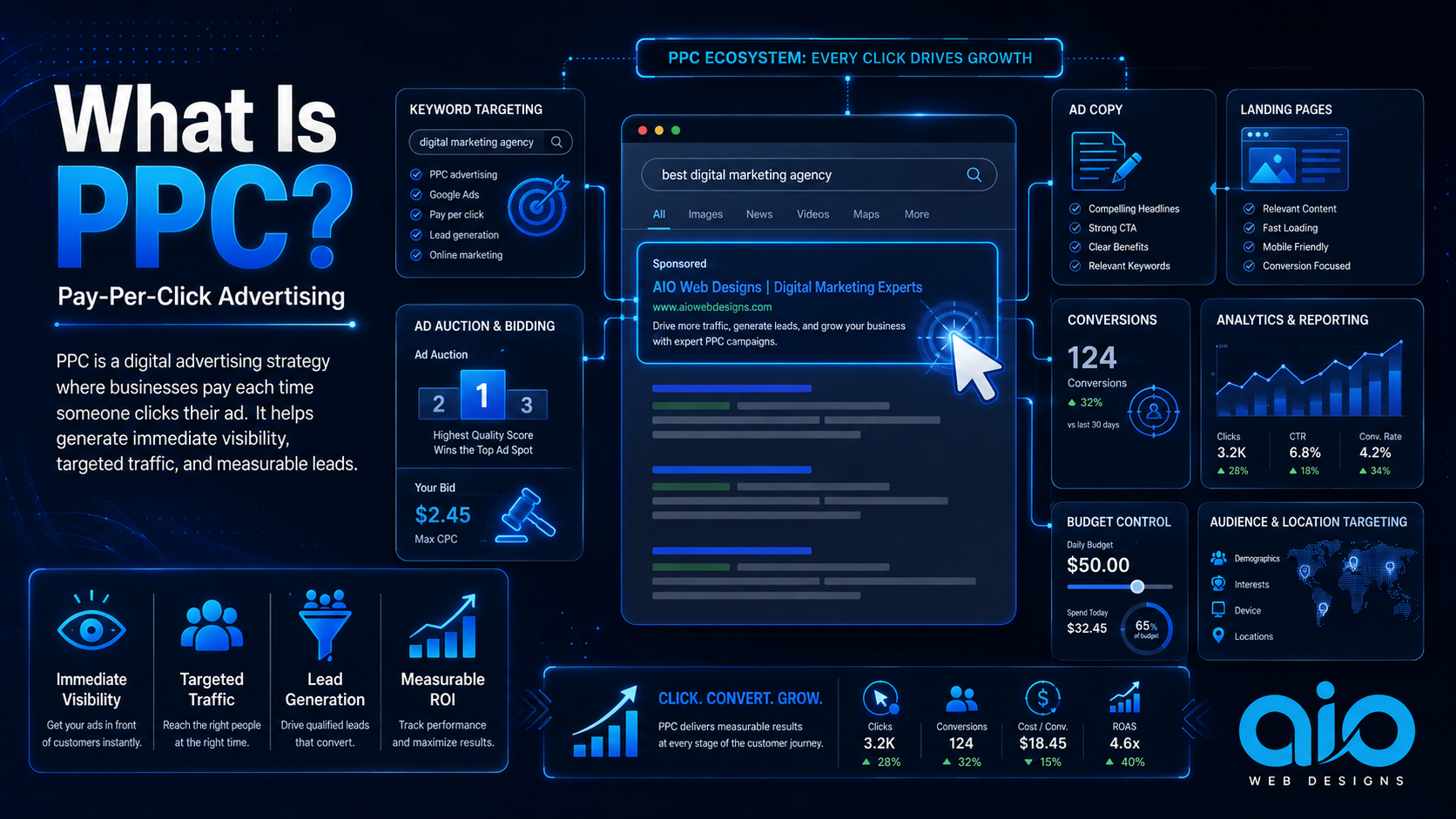
PPC, or pay-per-click advertising, is a form of digital advertising in which a business pays when someone clicks its ad. Google Ads is one of the most common PPC platforms, allowing companies to bid on searches related to their products and services.
Instead of earning a position through organic optimization, PPC allows a business to compete for prominent advertising placements. Ads can often begin appearing shortly after a campaign is approved and activated.
How Does PPC Work?
A PPC campaign begins by selecting keywords, locations, audiences, budgets, and advertising goals. Advertisers create ads and direct users to relevant landing pages. Google then considers several factors when determining which ads appear and where they are placed.
These factors may include:
- The advertiser’s bid
- Expected click-through rate
- Ad relevance
- Landing-page experience
- Search context and intent
- Competition from other advertisers
Businesses can control how much they are willing to spend each day and can target users by location, device, schedule, search term, and other criteria. This makes PPC particularly useful for reaching people who are ready to take action.
The Advantages of PPC Advertising
The greatest advantage of PPC is speed. A well-configured campaign can begin generating impressions and clicks much faster than an organic SEO strategy.
PPC can help a business:
- Gain immediate search visibility
- Target high-intent keywords
- Control daily and monthly spending
- Promote seasonal services or limited offers
- Reach customers within specific geographic areas
- Test new messaging or service offerings
- Measure clicks, calls, forms, and conversions
- Appear for searches where organic rankings are still developing
For example, a new Denver home service company may use PPC to generate leads while its website builds organic authority. The company can target searches connected to its most profitable services and limit ads to the communities it serves.
The Challenges of PPC
PPC traffic depends on continued spending. When the advertising budget stops, the visibility and traffic generally stop as well. This is one of the most important differences in the SEO vs PPC comparison.
PPC can also become expensive in competitive industries. Legal services, insurance, home improvement, healthcare, and other high-value markets may have substantial costs per click. Paying for traffic does not automatically guarantee leads or sales.
Poorly managed campaigns may waste money through:
- Overly broad keyword targeting
- Irrelevant search terms
- Missing negative keywords
- Weak landing pages
- Unclear calls to action
- Poor geographic targeting
- Incorrect conversion tracking
- Campaigns optimized for clicks instead of qualified leads
Successful PPC management requires ongoing monitoring, search-term reviews, bidding adjustments, landing-page improvements, and conversion analysis.
SEO vs PPC: Key Differences
| Factor | SEO | PPC |
|---|---|---|
| Placement | Unpaid organic search results | Sponsored advertising placements |
| Speed | Usually requires time to build visibility | Can generate visibility quickly |
| Cost Structure | Investment in strategy, content, and optimization | Payment for clicks plus campaign management |
| Traffic Duration | May continue after initial work is completed | Usually stops when advertising stops |
| Targeting | Based on content relevance and organic visibility | Detailed control over keywords, location, schedule, and audiences |
| Trust | Can build strong authority and credibility | Clearly labeled as sponsored content |
| Testing | Changes may take time to evaluate | Ads and landing pages can be tested quickly |
Is SEO or PPC More Cost-Effective?
The answer depends on the business, industry, timeline, and goals. SEO often becomes more cost-effective over the long term because established pages can continue generating traffic without a separate charge for each click. However, the initial work required to build those rankings can be substantial.
PPC can be cost-effective when campaigns target valuable searches and produce profitable conversions. If a business spends $100 to acquire a customer worth several thousand dollars, the campaign may provide an excellent return.
The better question is not simply, “Which costs less?” It is:
Which strategy produces qualified leads and profitable customer relationships at a sustainable cost?
Businesses should measure total marketing investment against results such as calls, form submissions, appointments, purchases, customer value, and revenue.
When Should a Business Choose SEO?
SEO may deserve priority when a business:
- Wants sustainable long-term traffic
- Has time to build visibility gradually
- Needs to establish authority in its market
- Offers services people consistently research online
- Wants to reduce long-term dependence on advertising
- Has useful expertise that can support ongoing content
- Needs better local and organic visibility
SEO is especially valuable for businesses with stable, recurring demand. A dentist, contractor, dealership, pest control company, consultant, or salon can benefit from ranking for service, location, comparison, and informational searches throughout the year.
When Should a Business Choose PPC?
PPC may deserve priority when a business:
- Needs leads as quickly as possible
- Is launching a new service or location
- Has a time-sensitive promotion
- Wants precise geographic targeting
- Needs to test offers or messaging
- Has strong landing pages and conversion tracking
- Can afford the expected cost per lead
PPC can also help businesses reach high-value searches while organic rankings are still developing. It provides immediate market feedback about which keywords and offers generate attention.
Why SEO and PPC Often Work Better Together
For many businesses, the strongest answer to SEO vs PPC is not one or the other. It is a coordinated strategy that uses both.
PPC can provide immediate visibility while SEO builds long-term momentum. Search-term data from paid campaigns can also reveal which phrases generate qualified leads. Those insights can help shape service pages, blog topics, title tags, and organic content priorities.
SEO can improve the website and landing-page experience used by paid campaigns. Better content, faster pages, clearer service information, and stronger calls to action can support both organic rankings and PPC conversions.
A combined strategy can provide:
- Immediate and long-term visibility
- More search-result coverage
- Better keyword data
- Stronger landing pages
- Reduced dependence on one traffic source
- More opportunities to test messaging
- A clearer understanding of customer intent
For example, a Denver business could run PPC ads for its highest-priority services while developing SEO content for those same topics. As organic rankings improve, the advertising budget can be adjusted toward services, locations, or searches that still need additional support.
Local SEO vs Local PPC for Denver Businesses
Local businesses should also consider how each strategy affects geographic visibility.
Local SEO may include:
- Google Business Profile optimization
- Local service pages
- Location-based keyword targeting
- Customer review management
- Local citations
- Locally relevant backlinks
- Consistent business information
Local PPC can target customers by city, ZIP code, radius, neighborhood, device, or schedule. This can be useful for Denver businesses serving specific areas such as Parker, Aurora, Lakewood, Centennial, Littleton, or other nearby communities.
A local SEO and PPC strategy should reflect the actual service area. Targeting locations a business cannot serve may generate wasted clicks, poor experiences, and low-quality leads.
How to Decide Between SEO and PPC
Before choosing a strategy, answer these questions:
- How quickly do you need leads?
- What is your monthly marketing budget?
- How competitive are your target keywords?
- What is an average customer worth?
- Does your website currently convert visitors?
- Do you have accurate conversion tracking?
- Are you prepared to create useful content consistently?
- Do you have strong service or product landing pages?
- Are your goals short-term, long-term, or both?
A business with limited cash flow but strong industry expertise may initially prioritize SEO content and local optimization. A company that needs immediate appointment volume may prioritize PPC while building its organic presence in parallel.
Common SEO vs PPC Mistakes
Businesses should avoid treating either channel as automatic. Common mistakes include:
- Expecting SEO rankings within a few days
- Stopping SEO immediately after rankings improve
- Running PPC without conversion tracking
- Sending paid traffic to a weak homepage
- Targeting broad keywords without understanding intent
- Ignoring mobile usability
- Measuring clicks instead of qualified leads
- Failing to review lead quality
- Using separate SEO and PPC strategies that never share data
Both channels require thoughtful planning, measurement, and improvement. Traffic alone should not be considered success if visitors are not becoming legitimate business opportunities.
How Long Does SEO Take Compared With PPC?
PPC can begin generating traffic shortly after a campaign launches, but performance may still require several weeks of testing and optimization. Search terms, bids, ads, audiences, and landing pages must be reviewed before a campaign reaches its full potential.
SEO usually takes longer. Some technical improvements may produce early movement, while competitive rankings can take several months or longer. The timeline depends on the website, competition, market, content, authority, and consistency of the strategy.
SEO progress should be measured through more than one ranking. Important indicators include:
- Growth in search impressions
- More organic clicks
- Additional keywords entering the top 100
- Improved rankings for priority searches
- Increased organic sessions
- Higher engagement
- More calls and form submissions
Get Help Choosing Between SEO and PPC
The right digital marketing strategy should be based on your business goals, budget, website, competition, and desired timeline. There is no universal answer that applies to every company.
AIO Web Designs helps businesses evaluate their current online presence and determine where SEO, PPC, or a combined strategy may provide the greatest value. Our services can include keyword research, technical SEO, content optimization, local SEO, Google Business Profile management, landing-page improvements, campaign monitoring, and performance reporting.
Professional management may help your business avoid common problems such as weak targeting, wasted ad spend, technical SEO issues, poor landing pages, and inaccurate conversion tracking. It can also create a more coordinated strategy in which paid and organic data support one another.
If your Denver-area business needs immediate visibility, sustainable growth, or a combination of both, AIO Web Designs can help identify the most practical approach.
Ready to compare SEO vs PPC for your business? Contact AIO Web Designs to discuss your goals, current website, competition, marketing budget, and the search strategy most likely to support measurable growth.