Have you ever typed something into Google, only to find yourself sifting through irrelevant results? It’s a frustrating experience, right? As an SEO practitioner, I can tell you that this often happens when the content doesn’t align with what the user was truly looking for. This brings us to a fundamental concept in digital marketing: understanding search intent. At AIO Web Designs, we live and breathe this concept because it’s the bedrock of effective SEO strategy, especially here in a competitive market like Denver, Colorado.
Search intent, in its simplest form, is the “why” behind a user’s search query. What are they hoping to achieve? What information are they seeking? Are they looking to buy something, learn something, or find a specific website? Grasping these nuances is crucial for creating content that not only ranks well but also genuinely serves your audience.
Why Search Intent Matters for Your SEO Strategy
In the early days of SEO, keyword stuffing and tricking algorithms were common tactics. Thankfully, those days are largely behind us. Google’s algorithms have become incredibly sophisticated, prioritizing user experience and relevance above all else. This means that if your content doesn’t match the user’s intent, even if you have the right keywords, you’re unlikely to rank highly or convert visitors.
For businesses in Denver, understanding search intent is particularly vital. Whether you’re a local restaurant, a service provider, or an e-commerce store, your online visibility hinges on connecting with the right people at the right time. By tailoring your content to specific search intents, you can attract highly qualified leads and improve your conversion rates significantly.
The Four Main Types of Search Intent
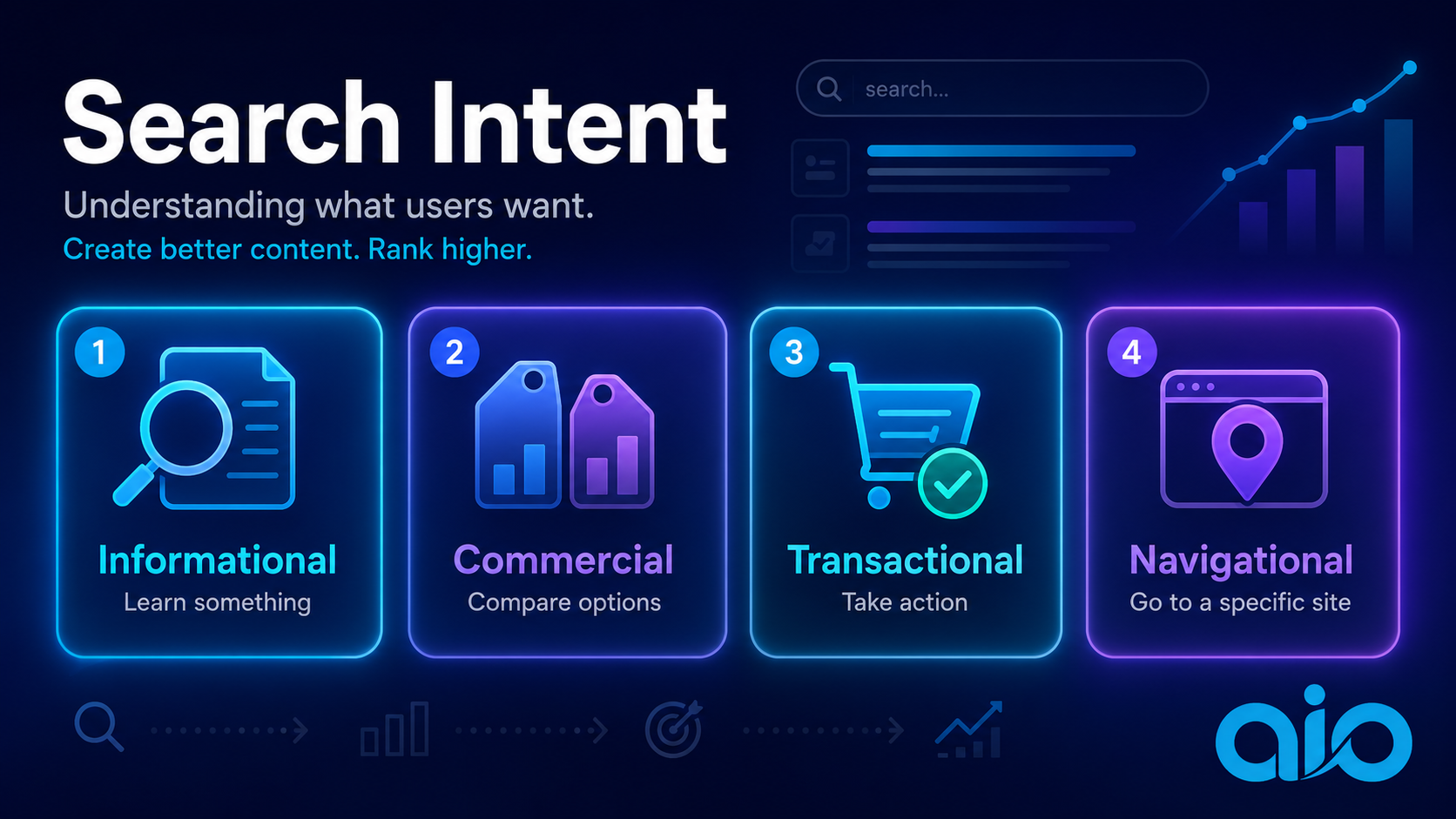
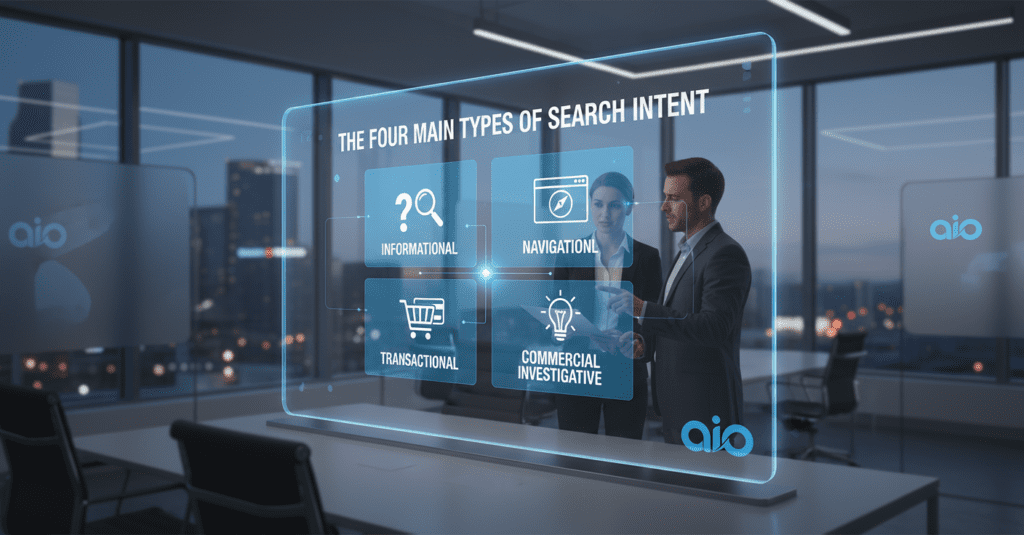
While search queries can be incredibly diverse, most can be categorized into four primary types of search intent: informational, commercial investigation, transactional, and navigational. Let’s break down each one.
Informational Search Intent
Users with informational intent are looking to learn something. They have a question, a problem, or a topic they want to understand better. They are in the research phase and are not typically looking to make a purchase immediately.
- Keywords often include: “how to,” “what is,” “why,” “best way to,” “examples of,” “guide,” “tutorial.”
- Examples: “how to change a flat tire,” “what is cryptocurrency,” “best hiking trails near Denver,” “history of the Denver Broncos.”
- Content types that satisfy this intent: Blog posts, guides, tutorials, encyclopedic articles, “how-to” videos, infographics.
For AIO Web Designs, creating informational content helps establish us as an authority in the digital marketing space. We aim to provide valuable insights that answer common questions, building trust and credibility with potential clients even before they are ready to commit to a service.
Commercial Investigation Search Intent
Commercial investigation intent sits between informational and transactional. Users here are researching products or services with the intent to purchase, but they are still comparing options and gathering information to make an informed decision. They are looking for reviews, comparisons, and detailed specifications.
- Keywords often include: “best [product/service],” “reviews,” “comparison,” “[product A] vs [product B],” “top 10,” “affordable,” “pros and cons.”
- Examples: “best SEO company Denver reviews,” “iPhone 15 vs Samsung Galaxy S24,” “affordable web design services Denver,” “top rated coffee shops in Denver.”
- Content types that satisfy this intent: Product reviews, comparison articles, expert roundups, detailed service pages with testimonials, case studies.
When we craft content for commercial investigation intent, we focus on providing comprehensive, unbiased information that helps users make a confident choice. This often involves showcasing our expertise and the value we bring to businesses in Denver.
Transactional Search Intent
Transactional intent is all about making a purchase or completing a specific action. Users with this intent are ready to buy, sign up, or contact a business. They are at the bottom of the sales funnel and are looking for a clear path to conversion.
- Keywords often include: “buy,” “shop,” “order,” “discount,” “coupon,” “sign up,” “pricing,” “hire,” “contact.”
- Examples: “buy SEO services Denver,” “order pizza online Denver,” “sign up for free trial,” “contact AIO Web Designs,” “web design packages Denver.”
- Content types that satisfy this intent: Product pages, service pages, e-commerce category pages, landing pages with clear calls-to-action, checkout pages.
For transactional searches, our goal is to make the conversion process as smooth and straightforward as possible. This means clear pricing, prominent calls-to-action, and an intuitive user experience on our website, https://aiowebdesigns.com.
Navigational Search Intent
Navigational intent means the user is trying to find a specific website or a specific page on a website. They already know where they want to go and are using a search engine as a shortcut.
- Keywords often include: Brand names, website names, specific page names.
- Examples: “AIO Web Designs,” “Facebook login,” “Amazon,” “Denver Post sports section.”
- Content types that satisfy this intent: Your homepage, “about us” page, contact page, specific product/service pages.
How to Use Search Intent to Improve Your SEO
Understanding intent is only the first step. The real value comes from applying it correctly across your website and content strategy.
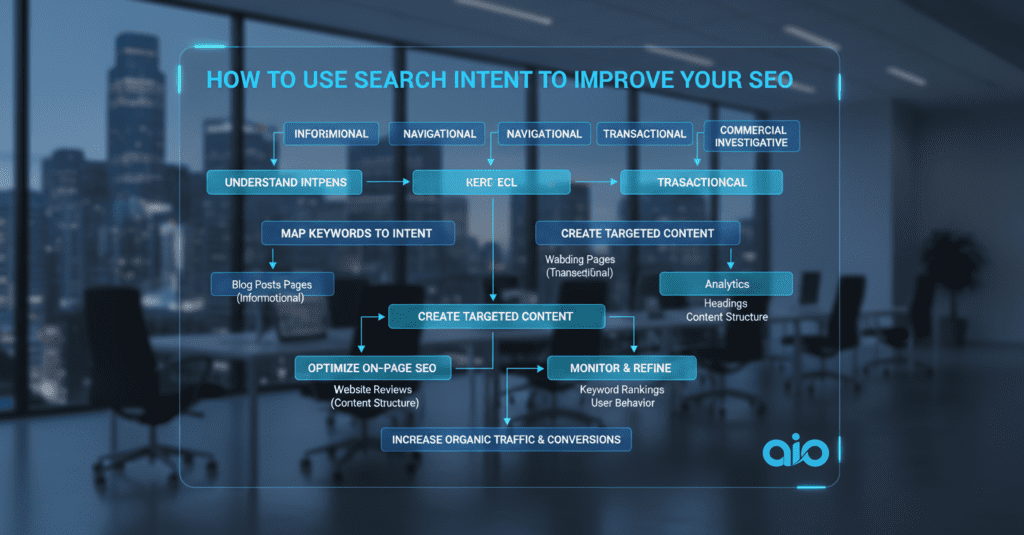
Start by analyzing your target keywords and identifying the intent behind them. Then, align your content type, structure, and messaging with that intent. For example, if someone is searching for “how to improve website speed,” they expect a helpful guide, not a sales page.
Next, optimize your pages to match what Google is already rewarding. Look at the top-ranking results and identify patterns in content format, length, and structure. This gives you a blueprint for what users expect.
Finally, make sure your website creates a clear path from informational content to conversion. A user may start with a blog post, but your goal is to guide them toward taking action when they are ready.
Closing Thoughts: Turning Search Intent into Real Business Growth
Understanding search intent is what separates average SEO from strategies that actually drive revenue. When your content aligns with what users are truly looking for, everything improves. Rankings go up, traffic becomes more qualified, and conversions increase.
If you’re serious about growing your business online, this is something you cannot afford to ignore. Every page on your website should serve a purpose and match a specific type of intent.
If you’re unsure whether your current strategy is aligned properly, now is the time to take a closer look.
SEO SERVICES
WEBSITE DESIGN SERVICES
SOCIAL MEDIA MARKETING STRATEGY
CONTACT AIO WEB DESIGNS
At AIO Web Designs, we focus on building strategies that not only bring traffic, but turn that traffic into real leads and customers. If you want to improve your rankings and get more out of your website, we’re here to help.
Frequently Asked Questions Regarding Online Search Intent
What is search intent in SEO?
Search intent refers to the reason behind a user’s search query. It helps determine what type of content should be created to match what the user is looking for.
Why is search intent important for SEO?
Search intent is important because Google prioritizes content that best matches user intent. Aligning your content with intent improves rankings, traffic quality, and conversions.
What are the four types of search intent?
The four main types are informational, commercial investigation, transactional, and navigational. Each represents a different stage in the user journey.
How do I identify search intent for keywords?
You can identify search intent by analyzing the wording of the keyword and reviewing the top-ranking results in Google to see what type of content is being displayed.
How does search intent impact conversions?
When content matches user intent, visitors are more likely to stay on the page, engage with the content, and take action, which leads to higher conversion rates.